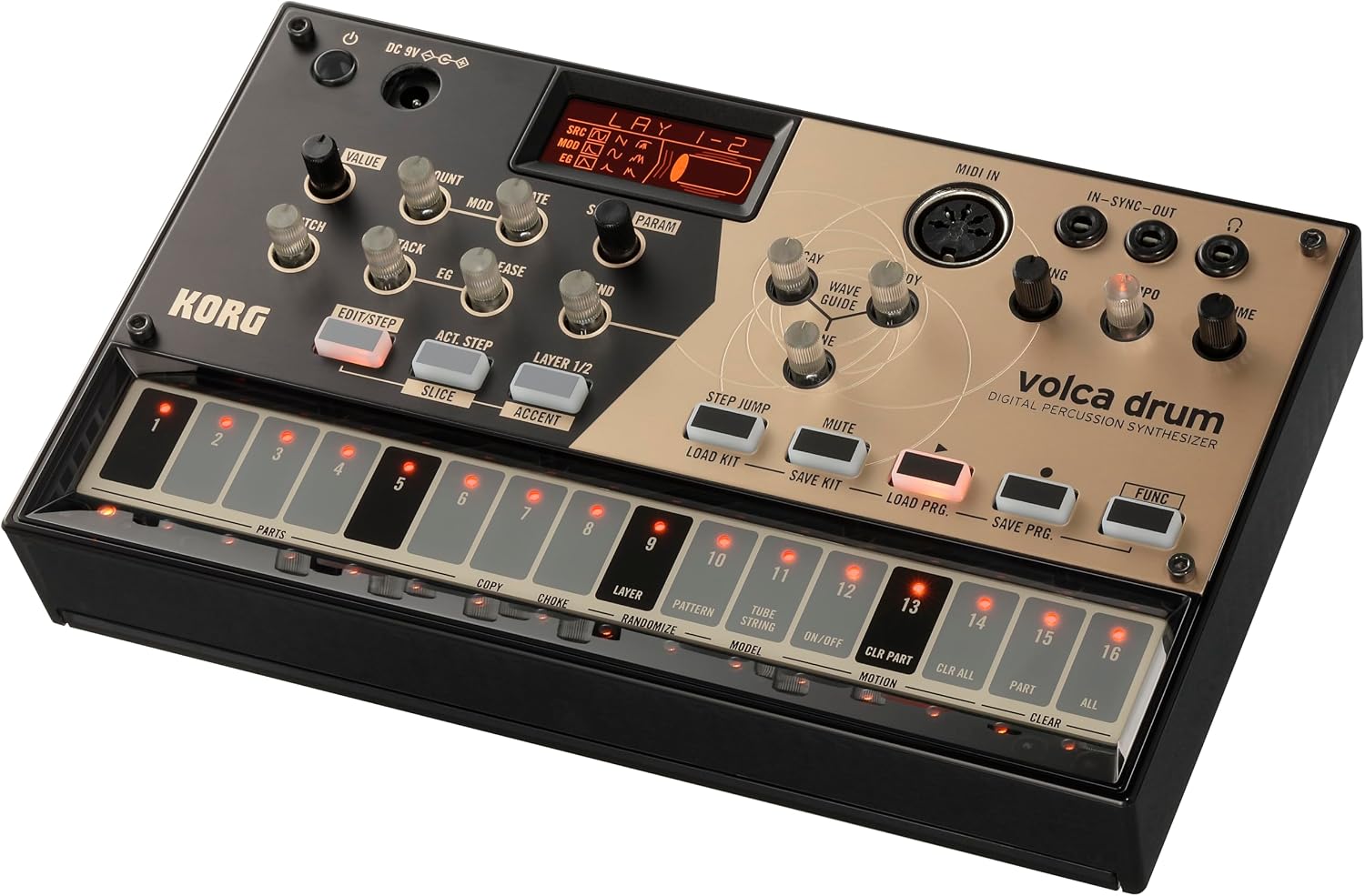
A drum machine is exactly what it sounds like: a dedicated hardware device—a physical box with buttons, knobs, and its own built-in sounds—that lets you program and play drum patterns without a computer. For years, the standard advice was to just use software inside your DAW (Digital Audio Workstation, the recording app on your laptop or desktop). That still works fine. But there’s a growing consensus among producers that putting a real hardware box in front of you changes how you work—you make decisions faster, you commit to sounds sooner, and the tactile experience of pressing pads and turning knobs tends to unlock ideas that staring at a screen doesn’t. If you’ve been curious about making that jump but you’re not ready to drop $500 or more, this guide covers the honest options under $300 and tells you exactly which one fits your situation.
Why Hardware Under $300 Is a Real Decision, Not a Compromise
The under-$300 bracket used to be mostly toys. That has changed. A combination of maturing budget product lines from Arturia, Korg, and Roland—plus the enduring second-hand market for classic mid-range gear—means you can get a genuinely capable, performance-ready drum machine in this price window right now in mid-2026.
The tradeoff isn’t capability vs. cost so much as it’s specialization vs. flexibility. Machines in this range tend to excel at one thing—analog punch, or deep sequencing, or portability—and ask you to accept limits in other areas. The job of this guide is to name those limits plainly so you can match the machine to the actual way you work.
By the numbers (mid-2026 street prices):
| Machine | New Street Price | Used/Reverb Average |
|---|---|---|
| Arturia DrumBrute Impact | $299 | $190–$220 |
| Korg Volca Beats | $159 | $75–$110 |
| Roland TR-606 (vintage) | n/a | $220–$310 |
| Teenage Engineering PO-32 Tonic | $89 | $55–$75 |
Prices sourced from Sweetwater product pages and Perfect Circuit listings as of May 2026. Used prices reflect Reverb.com aggregated sold listings and will shift with availability.
The Main Contenders, Honestly Assessed
Arturia DrumBrute Impact ($299 new, ~$200 used): The Default Recommendation
The DrumBrute Impact is the machine that the community consistently treats as the obvious first pick at this price—and for good reason. Sound On Sound’s review of the DrumBrute Impact describes its analog percussion voices as punchy and immediately usable, with the distortion circuit on the master output being a particular standout that owners regularly highlight in long-form forum discussions. It has ten analog drum voices including a credible kick, snare, hi-hats, and a few tonal percussion sounds, a 64-step (or 32-step) sequencer with polyrhythm support, and enough knobs-per-voice that you’re actually sculpting sounds rather than just selecting presets.
What owners consistently report: The kick is deep and punchy for analog. The sequencer workflow—where you hold a step to set its velocity or randomize patterns per-voice—clicks quickly for intermediate producers. The build quality, per aggregated reviews across MusicRadar and Sweetwater user submissions, feels more premium than the price suggests.
The honest limits: There are only ten voices, with no sample playback and no way to load your own sounds. If you want to blend your own samples with analog synthesis, this box can’t do it—you’d need to run it alongside a DAW or a separate sampler. There’s also no built-in FX beyond that distortion circuit. The sequencer is deep but unconventional; it rewards time investment, and some producers find the step-programming paradigm slower than working in a DAW grid initially.
If X, then Y: If you make techno, electro, industrial, or any style where raw analog drum character is the point—and you’re comfortable programming patterns on hardware rather than a screen—the DrumBrute Impact is the clear pick. Buy new if you want the warranty buffer while you’re learning the workflow. Buy used if you’re confident you’ll vibe with analog sequencing and want to keep $100 in your pocket.
Korg Volca Beats ($159 new, ~$90 used): The Low-Risk Entry Point
The Volca Beats is a tiny analog drum machine—roughly the size of a hardcover book—with 10 analog and digital hybrid voices and a 16-step sequencer. Perfect Circuit’s product notes for the Volca Beats correctly identify its two biggest selling points: the price floor is low enough that the downside risk of “this isn’t for me” is minimal, and the analog kick and snare engines are genuinely expressive for the money.
What owners consistently report: The tactile, hands-on sequencing—where you activate steps in real time by pressing lit buttons—is fast and fun for live jams. The MIDI input means you can sequence it from a DAW if you want. The form factor is genuinely pocketable.
The honest limits: The Volca Beats is not a deep machine. The individual voice controls are minimal—most voices have only one or two parameters—and there is a longstanding community complaint (documented across production forums for years) that the hi-hat synthesis sounds thin and digital in a way that ages poorly in a mix. Owners who outgrow it tend to do so quickly once they’ve internalized hardware sequencing basics.
If X, then Y: If you’ve never programmed a hardware step sequencer and you’re genuinely uncertain whether the hardware workflow will stick for you—or if $300 is a stretch right now—the Volca Beats is a reasonable low-commitment entry point. Treat it as a $159 trial run, not a forever machine. If you’re already confident you’ll commit to hardware, skip it and save toward the DrumBrute Impact or its used equivalent.
Teenage Engineering PO-32 Tonic ($89 new, ~$65 used): The Weird, Capable Wildcard
The Pocket Operator series from Teenage Engineering are calculatr-sized devices—no exaggeration, they’re about the size of a TV remote—that use synthesis and sampling to pack genuinely musical tools into an absurdly small package. CDM’s overview of the Pocket Operator series notes that the PO-32 Tonic specifically uses a wavetable synthesis engine for its percussion sounds, which means it can make a wide range of tones from electronic kicks to snappy electronic snares to abstract noise hits. It also has a sync output that chains multiple POs together or locks to a DAW.
The Tonic is interesting in 2026 because it accepts sound banks uploaded from a free companion app, giving it more flexibility than its size implies. Across aggregated community reviews, producers use it primarily as a compositional sketchpad or a supplemental portable device—not as a primary production tool.
The honest limits: It has no knobs. Sound design is done by holding buttons and pressing other buttons in combinations—a UI language that some producers find charming and others find maddening. Mix integration requires a line-level output connection that’s easy to botch without the right cable. Performing live with it in a serious rig feels like a deliberate aesthetic statement rather than a practical workflow.
If X, then Y: If your use case is sketching rhythmic ideas on commutes, traveling, or building patterns away from your studio, the PO-32 Tonic is legitimately excellent for the price. If your goal is a serious bedroom production setup, it’s a fun addition but not a substitute for the DrumBrute Impact.
The Vintage Option: Roland TR-606 (~$250–$310 used)
The TR-606 (Roland Transistor Rhythm 606, released 1981) is a fully analog drum machine that originally shipped as a companion to the Roland TB-303 bass synthesizer. At current used market prices—Reverb sold listings through May 2026 consistently cluster between $220 and $310 for clean units—it sits in a compelling position: genuine vintage analog circuitry, deep community documentation, and a straightforward step sequencer.
Attack Magazine’s beginner’s guide to drum machines mentions the TR-606 as an example of how early Roland analog percussion circuits established the aesthetic template for electronic drums that producers still chase today. The community consensus is that the kick and snare voices have a particular character—airy, punchy, slightly lo-fi—that’s been sampled and emulated extensively but still sounds distinctively good in a hardware context.
The honest limits: Buying vintage means buying a 40-year-old circuit. Capacitors age. Buttons develop contact issues. You’re operating without a warranty and with the understanding that any repair is a DIY or boutique-tech job. The stock sequencer has no MIDI—you’d need an aftermarket MIDI retrofit (available from several third-party suppliers) to sync it to a modern DAW reliably.
If X, then Y: If you’re drawn to the character of original vintage circuitry, you’re comfortable with some used-gear risk, and the specific tonal aesthetic of early Roland analog percussion aligns with the music you’re making—techno, lo-fi house, minimal wave—the TR-606 at $250–$275 used is a genuinely compelling buy. If you need reliability guarantees and modern connectivity out of the box, the DrumBrute Impact is the safer choice.
The Decision Framework
Most of the community debate in this price bracket comes down to two axes: analog character vs. workflow flexibility, and new reliability vs. used value. Here’s the clear decision tree:
- You want the most capable, reliable machine under $300 for immediate bedroom production work: Buy the Arturia DrumBrute Impact, new or near-mint used.
- You’re genuinely uncertain whether hardware drum programming will stick for you: Start with the Korg Volca Beats. If it sticks, upgrade.
- You want vintage analog character and you’re comfortable with used-gear risk: Find a clean Roland TR-606 under $275.
- Your primary need is portability or you’re supplementing an existing setup: The Teenage Engineering PO-32 Tonic is hard to beat at $89.
The one thing that experienced producers consistently warn against in this bracket: buying a machine because of its reputation rather than its fit with your actual music. The DrumBrute Impact is the consensus “best” pick, but a TR-606 at $260 will serve a minimal techno producer better if that analog vintage texture is genuinely what their tracks need. Match the tool to the work.
One final note: the used market moves fast in this price range. Machines under $300 turn over quickly on Reverb and at local shops. If you’ve done the research—and at this point you have—making a decision and acting on it beats waiting for the perfect price on the perfect machine.